Drywall texture in Logan, UT: knockdown, orange peel and smooth
Knockdown, orange peel and level-5 smooth texture for walls and ceilings in Logan and across Cache Valley, on new drywall and after repairs.
Licensed & insured
Residential & commercial
A texture that fits the room and the light
Drywall texture is the finish on the wall or ceiling: a sprayed pattern like knockdown or orange peel, or a smooth skim with no pattern at all. It covers the seams underneath and decides how the room looks in daylight.
We texture new drywall, match old texture after a repair, and scrape popcorn ceilings where it is safe to. Send a photo and we will tell you what the job takes.
Knockdown, orange peel & smooth Matching after repairs Ceilings and walls Free, no-obligation estimates
Texture work we do
From one patched wall to a whole house, here is what we texture across Logan and Cache Valley.
Ceiling texture
Knockdown or orange peel on new ceilings, or a ceiling skimmed smooth.
Knockdown texture
The classic Cache Valley look, sprayed and knocked down evenly.
Orange peel texture
A fine, consistent spray texture for walls and ceilings.
Smooth (level 5) finish
A flat, glass-smooth finish for a clean, modern look.
Texture matching
Repairs blended so the patch disappears into the existing texture.
Popcorn removal
Scrape off dated popcorn ceilings and refinish them clean.
Who calls us for drywall texture
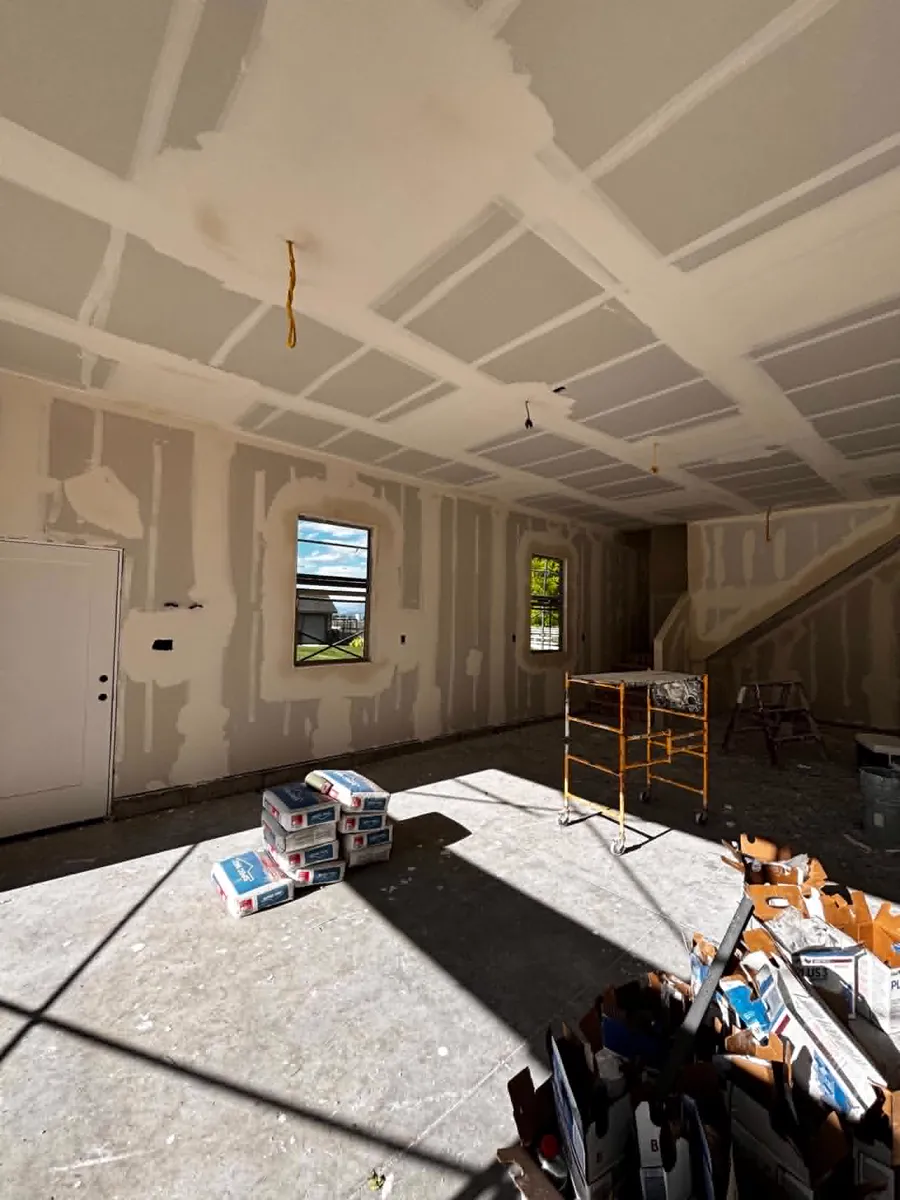
A builder has a house hung and taped and needs the ceilings and walls textured before the painters arrive. A family finished their own basement and picked a texture they now regret. Someone had a leak fixed and the patch on the ceiling is smooth while everything around it is sprayed. A landlord has a unit with a stained popcorn ceiling and wants it clean before the next tenant moves in.
Each of these is a different job, and the price and the schedule change with it. Tell us which one you have and send a photo taken from the side of the room, and we can say what the job looks like before we visit.
What drywall texture does
Finished drywall is a flat surface with seams, screw heads and corners that were covered in joint compound, which the trade calls mud. Light that crosses a flat wall shows every ridge and dip in that mud. A sprayed texture breaks the light up, so small flaws stop showing. It also hides the small differences in how each seam was sanded.
Choosing a texture is mostly about looks, upkeep and budget. Knockdown hides the most. Orange peel is lighter and easy to touch up. Smooth costs the most and shows the most. The sections below take each one in turn. If you need the seams taped and finished first, that work is covered on our drywall installation page, and we do both on one job if you like.
Knockdown
We spray thinned joint compound onto the surface in splatters, wait until the shine goes off it, then drag a wide knife across the peaks to flatten them. The timing matters. Knock it down too early and it smears into a flat wash. Wait too long and the peaks will not give.
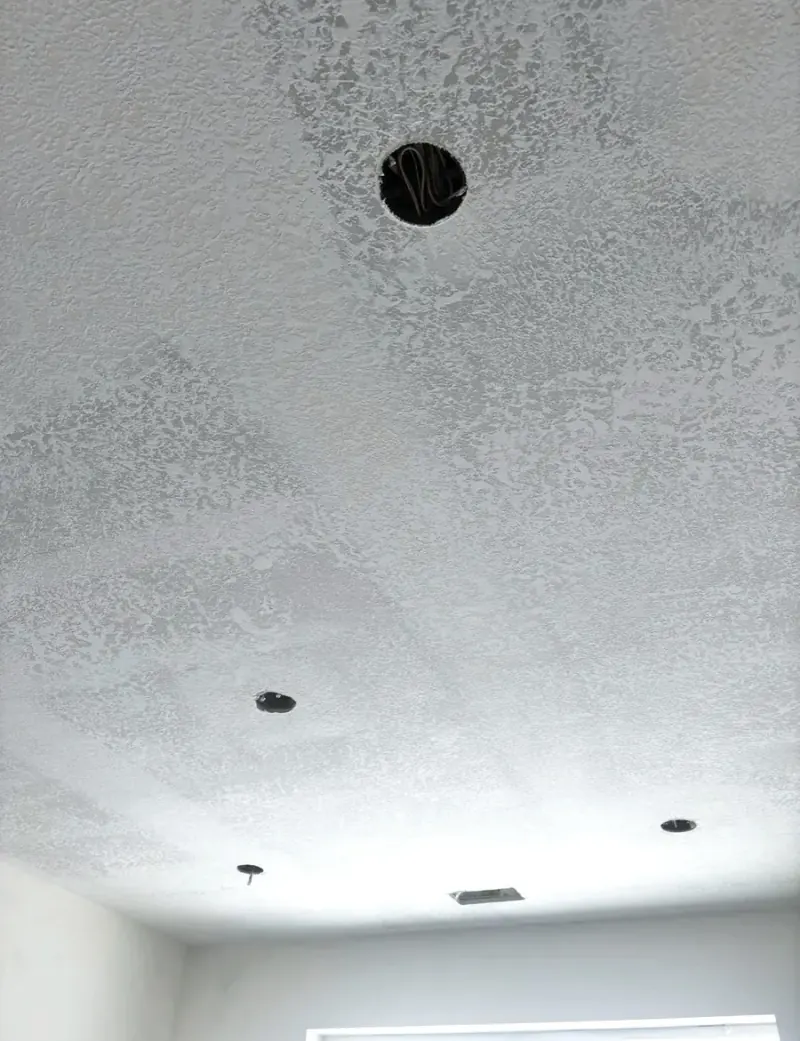
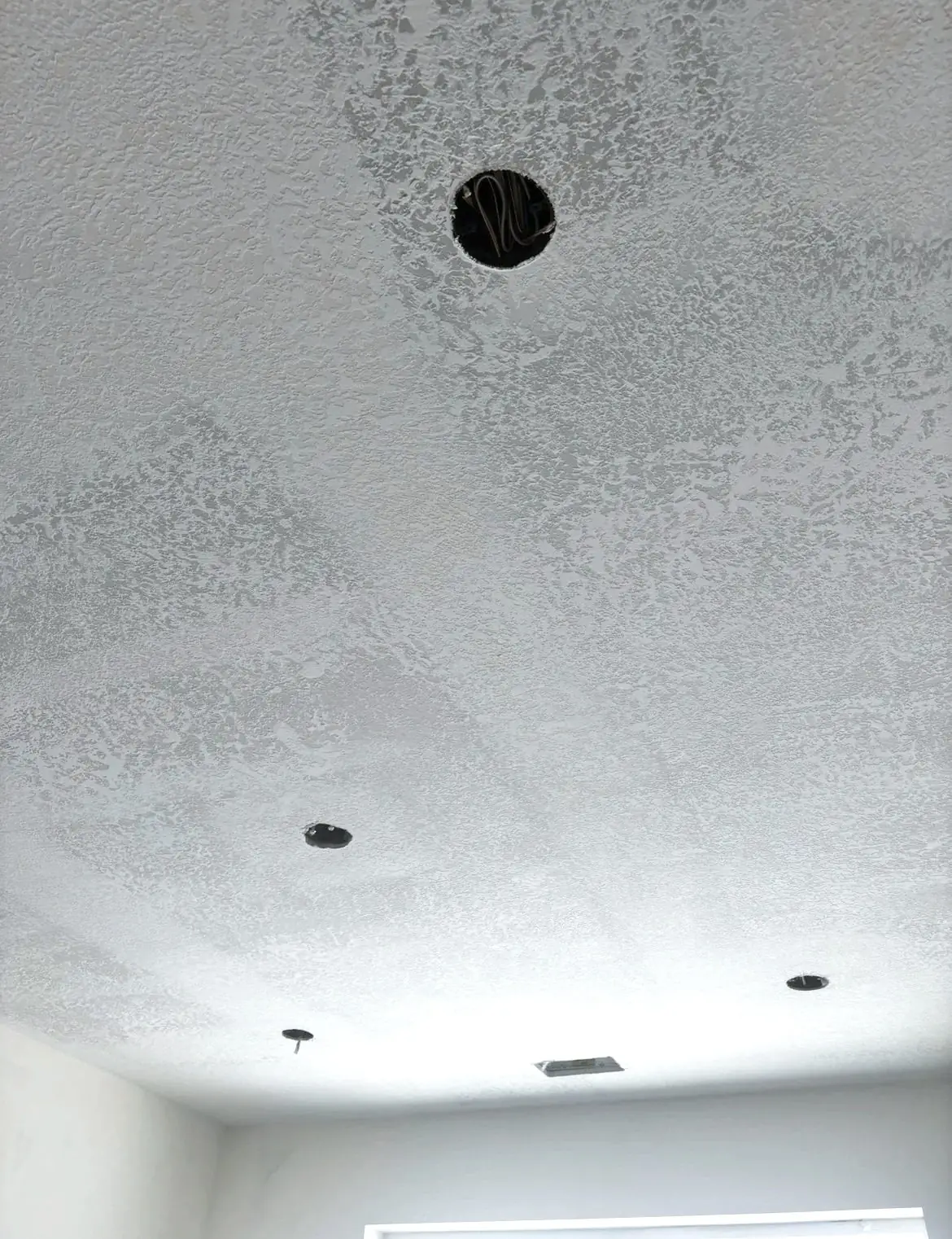
The result is a soft, mottled surface with flat tops and small valleys. Knockdown hides small waves, seams and patched areas better than any other finish on this page, which makes it the usual pick for ceilings and for houses where the drywall is not perfect. Dust collects in the valleys over the years, and each repaint fills them a little, so the pattern slowly softens. It is a good fit for family rooms, hallways and basements, where walls take some abuse.
Orange peel
Orange peel uses the same spray, thinner and finer, and it is left as it lands. The surface looks like the skin of an orange: small, even bumps with no flattened tops. Nothing is knocked down, so it goes on faster than knockdown, and a fine pattern is simple for a painter to roll over and for us to touch up later.
It shows flaws more than knockdown does, because the bumps stand up and catch the light. It suits bedrooms, offices and rooms where you want some texture with a lighter feel. The size of the bumps is set at the sprayer, with the nozzle and the air pressure, so tell us whether you want a fine pattern or a coarse one.
Level 5 smooth
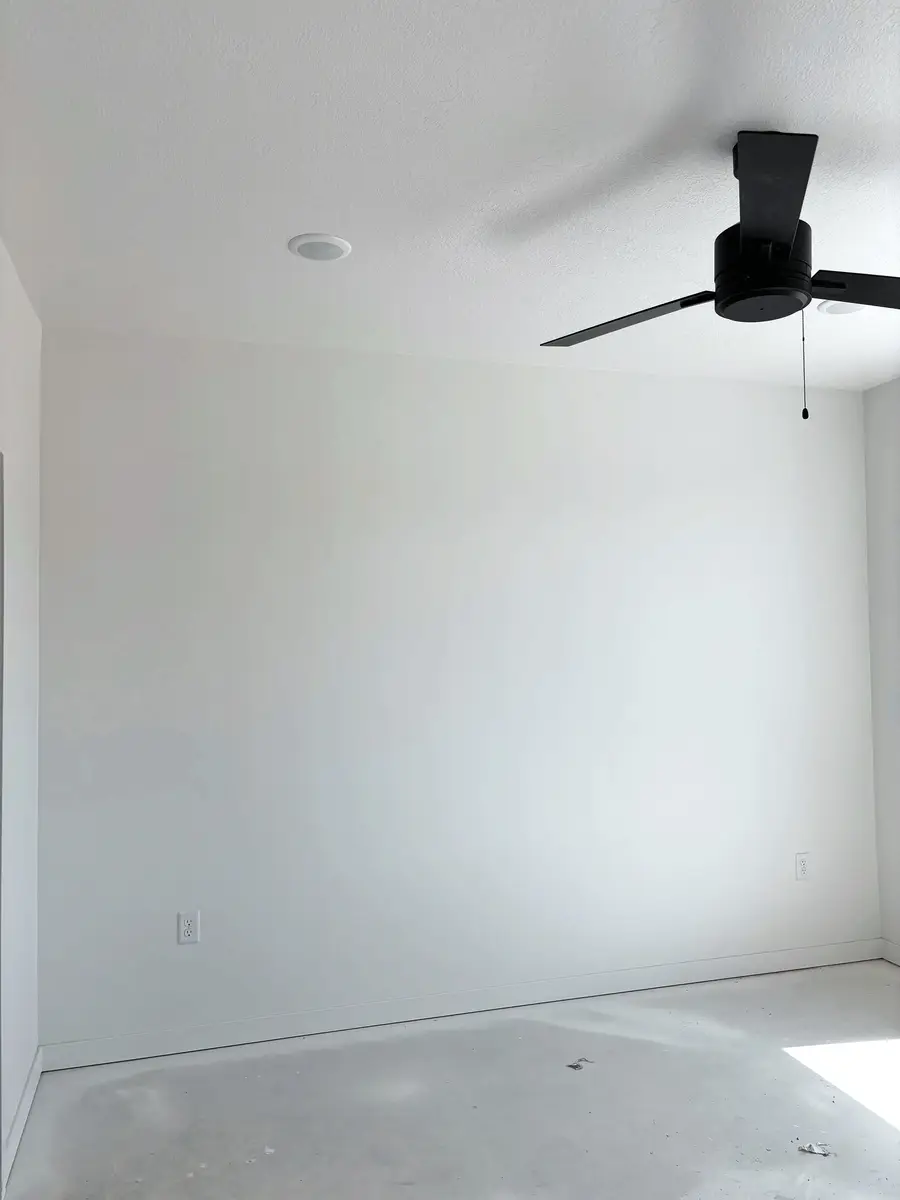
Drywall finishing is graded in levels from 0 to 5. Walls that will be textured are usually finished to level 3 or 4: the seams are taped, coated and sanded, and the texture does the rest. Level 5 adds a thin skim coat of mud over the whole surface, so the paper and the seams share one surface and the wall has no pattern at all.
It is the cleanest look and the most labor, which is why it costs more. It also needs better work behind it. A smooth wall shows every flaw when the light runs along it, so the seams have to be flat and the primer has to go on evenly. Choose it when you plan to use a gloss or dark paint, when a long wall faces a big window, or when you simply like a clean, modern wall. It is also the easiest surface to wipe clean.
Which finish to choose
If you are not sure, start with the room and the light. A ceiling or a wall with window light running across it does best with knockdown. A bedroom you want to feel lighter does well with orange peel. A smooth wall belongs where you want the paint color to be the whole story.
Think about who will repaint, too. A fine texture is simple for a painter. A heavy one takes more paint and a thicker roller. And think about the rest of the house. Matching the next room is often the best answer, because a house with three different textures looks like it was built in three different years. Send a photo of your rooms and we will tell you what we would pick.
Ceilings
Most of the texture we spray goes on ceilings, and ceilings are the hardest surface to do well. You work overhead, the light is usually poor, and every missed patch shows the first night the lights come on. We mask the walls, floor and windows, spray in even passes, and check the surface with a work light held low against it before the texture sets.
Recessed lights, vents and smoke detectors get covered first so the spray does not clog them. A tall ceiling, such as a vaulted living room or a stairwell, needs scaffolding and more time, and it is priced that way. Overspray travels, so doors to the rooms next door should stay closed while we spray.
Matching an existing texture after a repair
Matching is partly judgment. The best result comes from a photo of the ceiling in daylight, taken from the side so the shadows show the pattern, plus a note on how old the house is. Older textures were often put on by hand with a brush or a sponge, so we match the look and the size of the pattern as closely as we can.
A patch is blended outward into the old texture so there is no hard edge. New paint on a patch can also show as a different shade, so painting the whole wall or ceiling after a repair gives the best result. If the repair came from a leak, the water has to be dealt with first. Our drywall repair page explains how wet ceilings are judged and fixed.
Popcorn ceilings
We scrape popcorn ceilings and refinish them smooth or with a lighter texture. One warning before you or anyone scrapes one: ceilings sprayed before the 1980s can contain asbestos. A lab test costs little, and a positive result means a licensed abatement company has to do the removal, not us and not you. If your house is newer, scraping is a normal job. Our popcorn ceiling removal page covers the test, the scraping and the finish.
Painted popcorn is harder than bare popcorn, because the paint seals it and it does not soften when wet. A scraped ceiling usually has gouges, so it needs patching and sometimes a skim coat before the new texture goes on. That extra work is why scraping costs more than the spray that follows it.
Prep, masking and heat
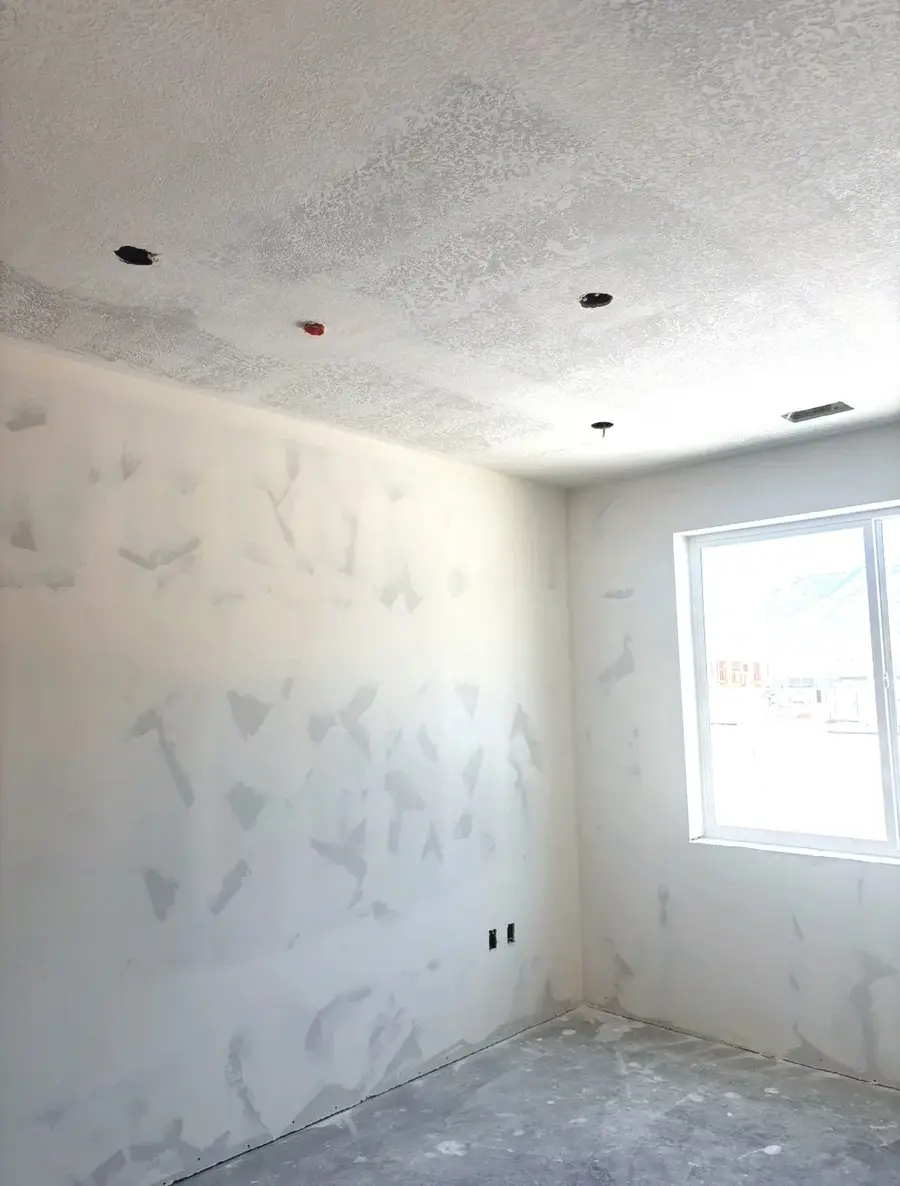
Texture goes on wet and it flies. Before we spray, the surface is primed so the mud and the paper take the texture at the same rate. Bare paper and bare mud soak up moisture differently, and the finish looks patchy if they are not sealed. Floors, windows, doors, trim and anything that stays in the room get covered with plastic and tape.
Spray texture needs the same warm, steady air as joint compound. We ask for the heat on in winter, at about 55 degrees or warmer, and the windows closed on a hot summer afternoon, so the texture dries evenly and does not crack or skin over before it is knocked down. In a cold Cache Valley January, a room with no heat can leave the texture wet for days.
After texture comes paint
Texture should dry fully before primer and paint, usually a day or more, longer in a cold room. A textured wall takes a thicker roller cover than a flat one, and it takes more paint to fill the valleys, so the painting costs a little more than the same wall left smooth.
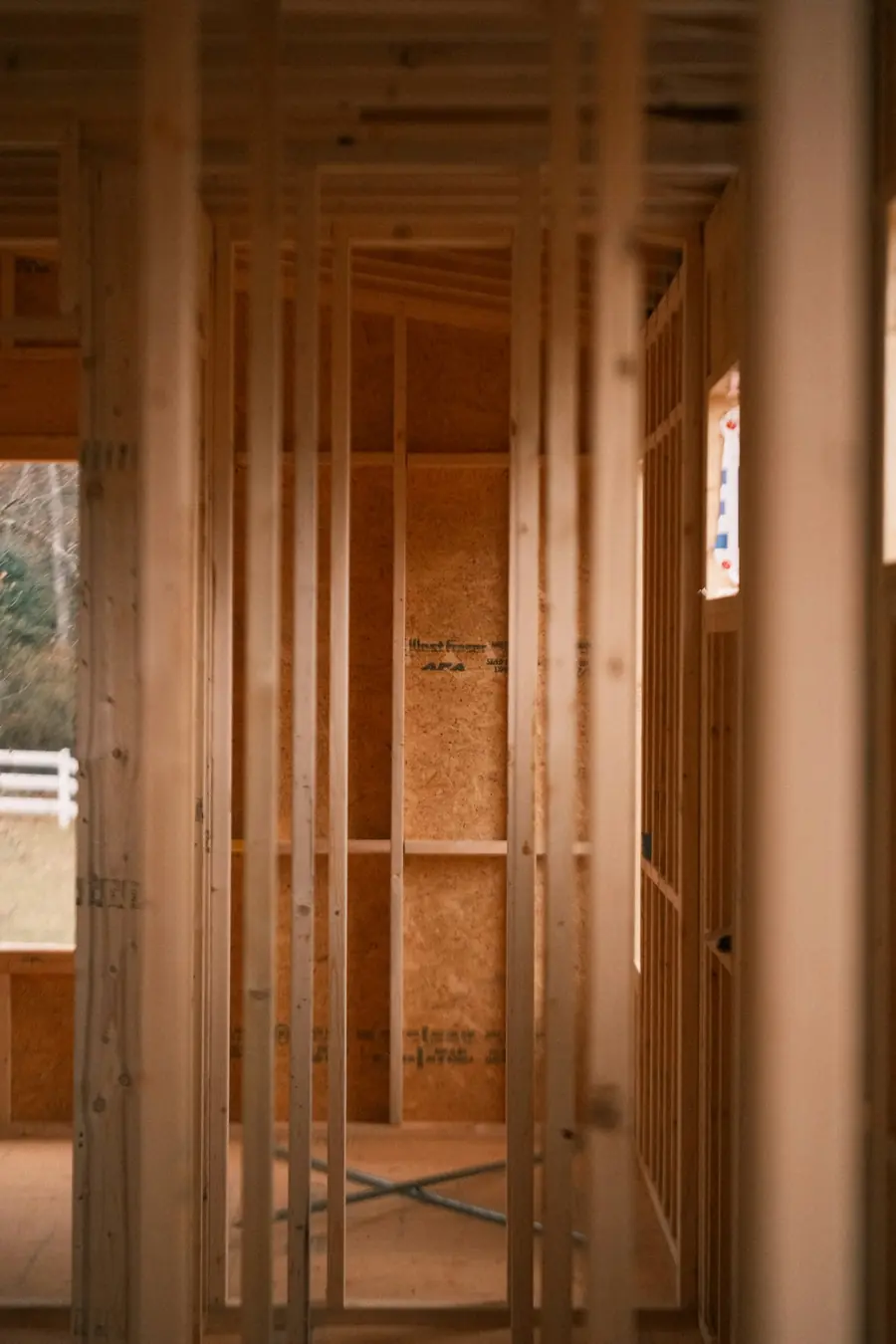
When the walls are ready, we can paint them too, or you can bring your own painter. If the walls are not hung yet, go to drywall installation first, and framing comes before that.
What we need from you before we start
- Heat on in the house, so the mud and texture dry evenly.
- Rooms cleared, or furniture pushed to the middle so we can cover it.
- The finish you want. If you are not sure, send photos of ones you like and we will tell you what they are.
- Electrical, plumbing and insulation finished, and any inspection passed, if the board is new.
Texture goes on fast and is hard to take off, so settle the finish before we spray.
Where we work
We work in Logan and across Cache Valley, in towns such as North Logan, Hyde Park, Smithfield, Providence, Millville, Nibley and Hyrum. If your town is not on that list, call or text and ask. We will tell you if it is too far for us.
Tell us about your texture job
Free, no-obligation estimates across Logan & Cache Valley.
Texture questions, answered
How much does drywall texture cost in Logan, UT?
It depends on the area, the ceiling height and the finish you choose. A level 5 smooth finish costs more than a sprayed texture because it takes more hand work. We give free, no-obligation estimates. Call or text (435) 557-2823.
Which texture hides the most flaws?
Knockdown. The soft mottled surface hides small waves and seams better than orange peel or a smooth finish.
Can you match my old ceiling texture?
We can match most of them. Send photos taken in daylight from the side so the pattern shows, and we will tell you what we think before we visit.
Do you remove popcorn ceilings?
Yes, once the ceiling has been tested if it was sprayed before the 1980s. If it tests positive for asbestos, a licensed abatement company has to remove it.
How long does texture take to dry?
Spraying a room goes quickly, but the texture needs about a day to dry before primer or paint, and longer in a cold room. We give a schedule with the estimate.
Can new texture go over old texture?
Sometimes. If the old texture is light and in good shape, new texture can go over it. A heavy old texture usually has to be skimmed flat first, and that adds to the job.
Do you tape and finish the seams too?
Yes. Taping and mud are part of our drywall work, and we can do them and the texture on the same job. See our drywall installation page.
Are you licensed and insured?
Yes. Toro R Services LLC is licensed and insured, locally owned and family-run.
Need texture or finishing in Logan or Cache Valley?
Tell us about your project and we'll get right back to you with a clear, honest quote.